
The Bakfiets Guide: Choosing a Cargo Bike for Your Family
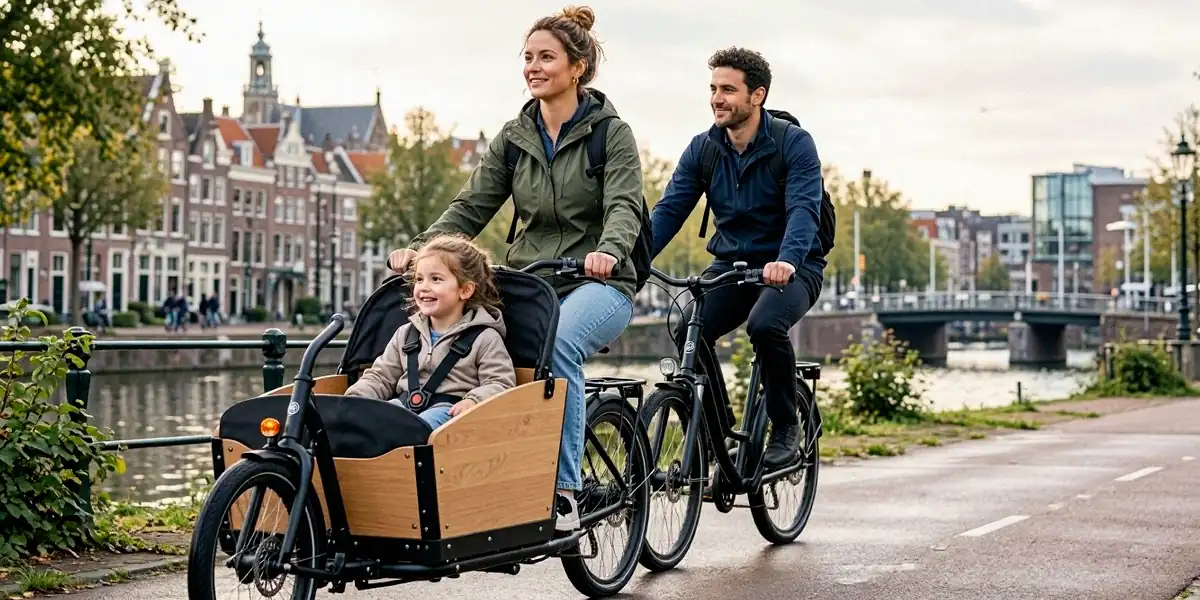
The first time we saw a Dutch parent glide past us with three kids, a week’s groceries, and what looked like a small dog all stacked into one box on wheels, we stopped dead on the sidewalk. It was a grey Tuesday morning in Utrecht, and the woman pedalling that bakfiets looked calmer than we do when we’re just carrying a backpack. We turned to each other and said the same thing: we need one of those.
That moment is a rite of passage for almost every expat family in the Netherlands. The bakfiets — literally “box bike” — is not a quirky novelty here; it’s a genuine replacement for the second car. In this guide, we’ll walk you through what we learned after months of test rides, price comparisons, and conversations with mechanics, so you can choose the right cargo bike for your family without the expensive mistakes.
Why a Bakfiets Makes Sense for Expat Families
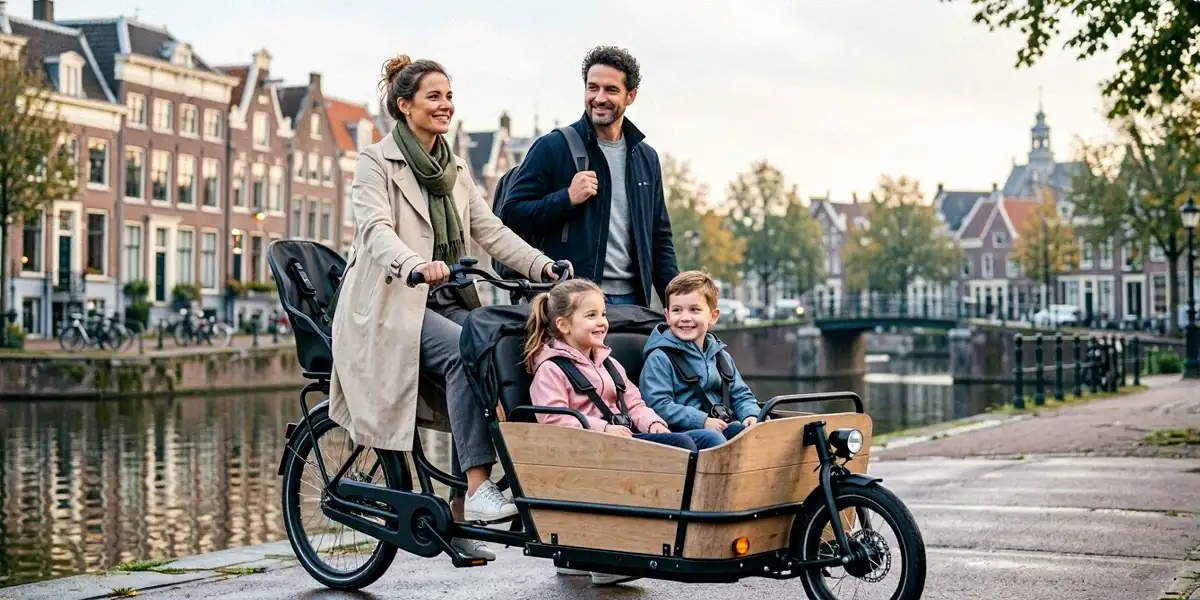
If you’ve recently moved here, you’ve probably noticed that Dutch cities were not designed around cars. They were designed around bikes, and specifically around bikes that can carry things. Once you understand that, the bakfiets stops looking eccentric and starts looking obvious.
The Dutch Cycling Culture Shock
For most of us, cycling back home was either a sport, a childhood activity, or a last resort. In the Netherlands, it’s simply transport. Kids cycle to school independently from around age six, parents cycle with toddlers in front boxes, and nobody bats an eye at a bike carrying a Christmas tree. When we arrived, the culture shock wasn’t the weather or the food — it was watching a mother in heels cycle through a rainstorm with two children and a cello. Once you accept that this is normal, you want in.
Practical Benefits for Families with Young Children
The practical case is even stronger than the cultural one. A bakfiets lets you:
- Do the school run for two or three children on one vehicle, without hunting for parking.
- Carry a full week of groceries from Albert Heijn, Lidl, or the weekly market in one trip.
- Skip traffic jams and parking fees in city centres like Amsterdam, Utrecht, and Haarlem.
- Get exercise without scheduling a separate gym visit.
- Save hundreds of euros a month compared to running a second car.
For expat families with kids under six, the bakfiets quickly becomes the default way to move around. School runs along narrow streets, nursery drop-offs, and library trips all become easier, not harder.
Types of Bakfietsen: Two Wheels vs. Three Wheels
This is the single biggest decision you’ll make, and it comes down to a trade-off between agility and stability. There’s no universally right answer — it depends on your streets, your kids, and your confidence on two wheels.
Two-Wheel Cargo Bikes: Agile and Fast
Two-wheel bakfietsen handle like a normal bike once you’re moving, which makes them faster and more maneuverable in tight city traffic. The Urban Arrow Family is the best-known example — a popular electric two-wheel cargo bike with a spacious box that can carry up to three small children or two older ones, plus shopping. The catch is that low-speed stability takes practice, especially when loaded and turning at a junction. Most parents adapt within a week or two.
Three-Wheel Cargo Bikes: Stable and Spacious
Three-wheel models trade speed for confidence. The Babboe Big is a three-wheel bakfiets known for stability and affordability, and it’s a common first cargo bike for families who want something they can ride immediately without a learning curve. You can stop at a traffic light without putting a foot down, load children while the bike stands still, and never worry about tipping. The downside is a wider turning circle and slower average speeds on longer commutes.
Key Features to Consider Before Buying
Once you’ve picked two or three wheels, the rest of the decision is about specification. These are the factors that will shape your daily experience far more than the brand logo on the frame.
Electric Assist: Is It Worth It?
Short answer: almost always yes. A loaded bakfiets with two children and groceries can weigh well over 100 kg. Add a headwind on the Amstel or a bridge in Nijmegen and you’ll be grateful for a motor. Electric assist (pedelec) makes the bike usable in all weathers and over longer distances, and it’s the main reason many parents actually stick with cargo biking rather than abandoning it after a month. Budget models exist without electric assist, but they’re really only suitable for flat, short, light-load trips.
Box Size and Seating Configurations
Box dimensions vary significantly between models. Think about how many children you’ll carry now, and whether you plan to add another. Many boxes include bench seats with harnesses, and some can be reconfigured with a Maxi-Cosi adapter — a bracket that allows infant car seats to be mounted in many bakfiets boxes, so you can transport a newborn safely from day one. If you have a baby and a toddler, this feature alone can decide which model you buy.
Weather Protection and Accessories
You will ride in the rain. Everyone does. A good rain cover for the box is not optional in the Netherlands — it’s essential. Beyond that, consider:
- A rain tent or canopy that covers children and cargo.
- Comfort cushions and extra harnesses for longer rides.
- Lights and reflectors that meet Dutch regulations.
- A sturdy lock (or two) — cargo bikes are theft targets.
- A cover for parking outdoors overnight.
Top Bakfiets Brands in the Netherlands
The Dutch market is mature, which is good news for buyers. These are the names you’ll see again and again on the streets and in the showrooms.
Urban Arrow: The Premium Choice
The Urban Arrow Family is the benchmark for two-wheel electric cargo bikes. Pros: lightweight frame for its class, powerful Bosch motor, excellent handling, strong resale value. Cons: high price (often €5,000+ new) and a box that’s slightly narrower than some three-wheelers. If your budget allows it, this is the bike most expat parents end up wanting.
Babboe: Affordable and Family-Friendly
Babboe is the brand you’ll see outside Dutch primary schools every morning. The Babboe Big is their classic three-wheeler: stable, roomy, and far cheaper than premium competitors. Pros: accessible pricing, huge range of accessories, strong dealer network. Cons: heavier than two-wheel rivals, and the ride is less sporty. A great option if stability matters more than speed.
Bakfiets.nl: The Classic Dutch Brand
Bakfiets.nl has been building cargo bikes in the Netherlands for decades and offers both two- and three-wheel models in a range of configurations. Pros: genuine Dutch heritage, wide customisation options, solid build quality. Cons: less polished design than Urban Arrow, and prices vary widely depending on spec.
Other names worth a look include Johnny Loco, known for stylish retro-influenced designs, and e-cargo specialists like Riese & Müller for riders who want a more premium two-wheeler.
Buying, Leasing, or Renting: What Works for Expats
If you’re here on a two-year posting, buying a €5,000 cargo bike might feel excessive. Fortunately, you have options.
New vs. Second-Hand: Pros and Cons
New gives you warranty, the latest motor technology, and dealer support. Second-hand is dramatically cheaper — often 40–60% off retail — but you need to inspect the battery, motor, and frame carefully. Marktplaats is the go-to platform for second-hand bakfietsen in the Netherlands, and you’ll find everything from barely-used Urban Arrows to well-loved Babboes. Always test ride before you pay, and ask for the battery’s age and charge history.
Leasing and Subscription Services
Some Dutch employers offer bike leasing schemes, which let you pay for a bakfiets from gross salary — a meaningful tax advantage. If your employer doesn’t, subscription services fill the gap. Swapfiets offers cargo bike subscriptions in major Dutch cities, which is ideal if you want to try cargo biking without committing to ownership. Monthly costs are higher over the long run, but you get maintenance and replacements included.
Maintenance and Daily Life with a Bakfiets
Owning a bakfiets changes your routine in ways you don’t fully appreciate until you’ve done it for a month. The school run becomes a pleasant ritual instead of a logistical puzzle, and grocery shopping stops requiring a car trip.
Keeping Your Bakfiets in Top Shape
Cargo bikes work harder than normal bikes, so they need more attention. Expect to:
- Check tyre pressure every two weeks — loaded bikes lose pressure faster.
- Service brakes and gears at least once a year, more if you ride daily.
- Keep the battery between 20% and 80% charge for longevity.
- Clean and lubricate the chain regularly, especially after wet rides.
- Book a professional service annually at a bakfiets specialist.
Parking and Storage Solutions
Parking is the practical hurdle nobody warns you about. A bakfiets is roughly 2.5 metres long, so it won’t fit in a standard bike rack. Most Dutch cities have widened parking spots for cargo bikes near stations and shopping streets, but at home you’ll want a ground-floor storage space, a garden, or a dedicated street spot. If you live in an upstairs apartment, measure your stairwell and door widths before buying — this is the mistake that catches the most expats.
FAQ
How much does a bakfiets cost in the Netherlands?
New prices range from around €1,800 for a basic non-electric three-wheeler to over €6,000 for a premium electric two-wheel model like the Urban Arrow Family. Second-hand bakfietsen on Marktplaats typically sell for €700 to €3,000 depending on age, brand, and battery condition.
Do I need a licence or insurance for a bakfiets?
No licence is required — a bakfiets is legally a bicycle in the Netherlands as long as it meets the pedelec rules (motor assist up to 25 km/h, no throttle). Insurance isn’t mandatory, but theft and liability cover is strongly recommended, and many home insurance policies can be extended to include a cargo bike.
Can I carry a baby in a bakfiets?
Yes. Maxi-Cosi adapters allow infant car seats to be mounted in many bakfiets boxes, so you can transport a newborn safely from the first weeks. Check that your chosen model supports the adapter before buying, as not all boxes are compatible.
Is a two-wheel or three-wheel bakfiets better for beginners?
Three-wheel models like the Babboe Big are easier for beginners because they stay upright when stationary. Two-wheel bikes such as the Urban Arrow Family are faster and more agile but require a short learning period. If you’re unsure, test ride both before deciding.
Can I rent a bakfiets before buying one?
Yes. Swapfiets offers cargo bike subscriptions in major Dutch cities, and many local bike shops rent bakfietsen by the day or week. Renting first is a smart way to find out whether cargo biking fits your daily routine before committing to a purchase.
Choosing a bakfiets is really an investment in your family’s Dutch lifestyle — in slower mornings, car-free school runs, and a genuine connection to the way this country moves. Take your time, test ride as many models as you can, and don’t be surprised if the bike you thought you wanted isn’t the one you fall in love with on the street.