
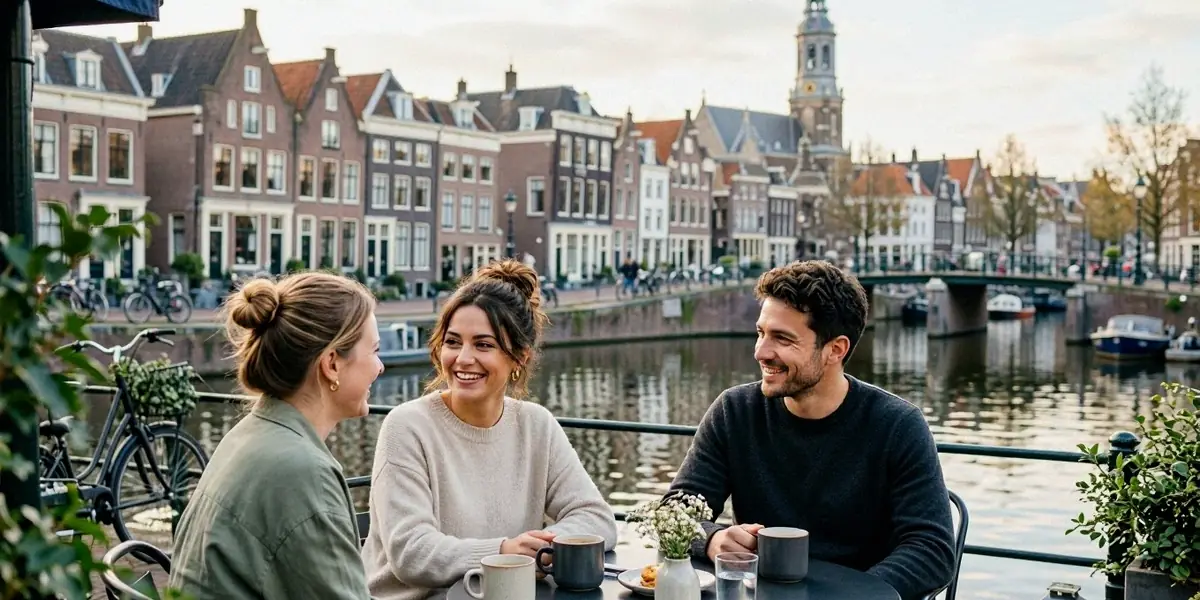
Making Friends Abroad: Building a Social Life in a Dutch Town
When we first moved to a small Dutch town, the silence was the loudest thing we’d ever heard. Our neighbors smiled and said “goedemorgen” as they cycled past, but by week three we still hadn’t had a real conversation with anyone outside the supermarket checkout. Then one rainy Tuesday, a woman with a bakfiets full of toddlers stopped in front of our house, pointed at our struggling hedge, and said in perfect English: “You’re doing it wrong. Want me to show you?” That blunt offer of help turned into a coffee invitation, which turned into a friendship that has lasted years. That’s how it works here — Dutch social life rarely arrives with fanfare. It arrives sideways, through shared activities, practical help, and traditions like Sinterklaas. This is what we’ve learned about building a social life in a Dutch town as an expat family.
Why Dutch Social Circles Can Feel Closed (And Why They Aren’t)
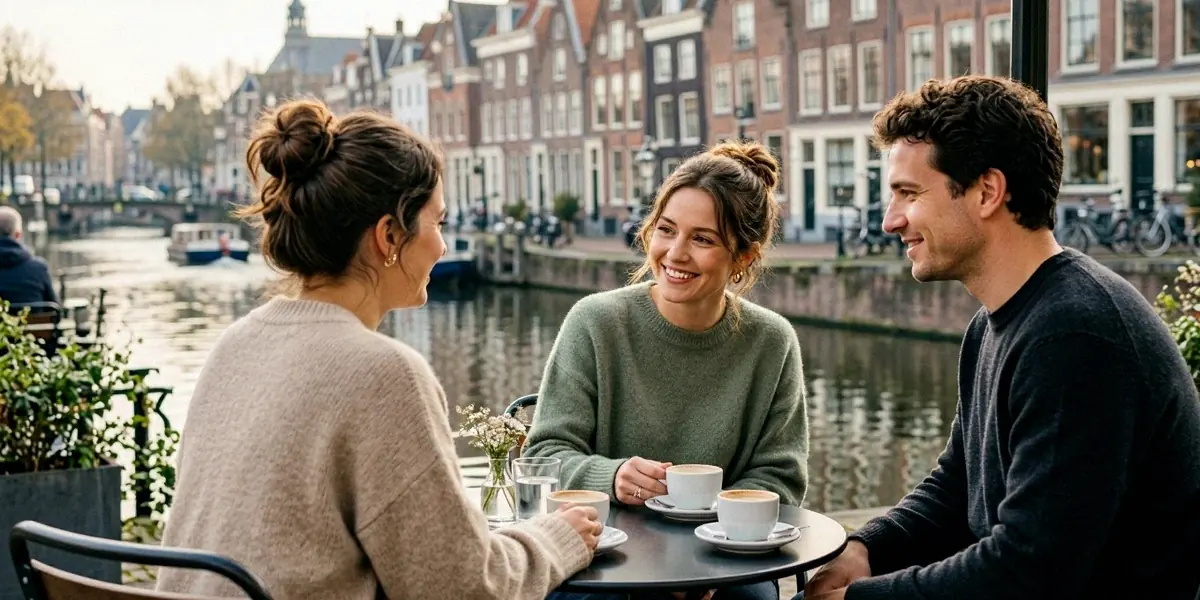
In our experience, the first few months in the Netherlands can feel socially impenetrable. Dutch people often have tight friend groups that date back to primary school, student days, or a sports club they’ve belonged to since childhood. Those circles aren’t hostile — they’re simply established. The concept at the heart of it all is gezelligheid: that warm, cozy, convivial feeling the Dutch chase in every gathering. Gezelligheid is built slowly. A Dutch friendship often starts with years of casual contact before it deepens into something real. The good news? Once you’re in, you’re in for life. The trick is to stop waiting for spontaneous invitations and start showing up in the places where Dutch people already gather.
The Myth of Dutch Directness
Everyone warns you about Dutch directness before you move. In practice, we found it far less scary than advertised. Yes, a colleague will tell you your Dutch pronunciation is “interesting” and a neighbor may suggest your recycling bin placement is “not logical.” But this same directness means Dutch people rarely play social games. What they say is what they mean. An invitation to drop by for coffee is genuine, not polite filler. When we stopped interpreting bluntness as rudeness and started treating it as clarity, our social life improved almost immediately.
How to Read Dutch Social Cues
Dutch social cues run on planning and practicality. Impromptu drop-ins are uncommon; a text a few days ahead is the norm. Birthday parties are famously organized in strict circles — family first, then friends, then colleagues — and “cirkeltrekken” (the birthday circle ritual) is worth reading up on before your first Dutch birthday party. If someone gives you their phone number, they expect you to actually use it. Follow-up matters more than charm. We learned to propose specific plans — “Shall we walk the kids to school together on Friday?” — rather than vague “we should get together sometime” comments that Dutch people tend to take literally or not at all.
Start with Your Neighborhood: Bakfiets, Buurt, and Beyond
Your buurt (neighborhood) is the single easiest place to start. Dutch neighborhoods are organized in ways that would make most expats jealous: street WhatsApp groups, seasonal buurtborrels (neighborhood drinks), and playgrounds where the same parents appear at the same time every afternoon. The bakfiets is your secret weapon. Nothing starts a conversation faster than a cargo bike loaded with kids, groceries, or a suspiciously large plant. We’ve had more chats at the bike rack outside Albert Heijn than at any networking event. HEMA is another neutral meeting ground — grab a cheap coffee and a tompouce at the counter and you’ll inevitably bump into someone you know.
Using the Bakfiets as a Social Icebreaker
The bakfiets is a social magnet. Dutch parents will comment on your model, your rain cover setup, or how many children you’ve managed to fit inside. We recommend using it shamelessly: park at the school gate, load it with library books, and let the questions come. A quick tip — learn the difference between a bakfiets and a longtail cargo bike, because someone will ask, and knowing your stuff earns instant credibility.
Joining a Buurtapp or Local Facebook Group
Ask a neighbor which buurtapp (neighborhood app) your street uses — often WhatsApp, sometimes apps like Nextdoor or local Facebook groups. These are goldmines for practical information and low-stakes social contact. We found our babysitter, a secondhand bike, and our first dinner invitation all through the neighborhood group. Attend the buurtborrel even if you only know one person; Dutch neighbors are far more open at these events than in passing on the street.
Leverage Dutch Traditions: Sinterklaas, King’s Day, and More
Dutch traditions are built-in social opportunities, and skipping them means missing the easiest on-ramp to local life. The two big ones for expat families are Sinterklaas and King’s Day. These aren’t just cultural spectacles — they’re structured moments when neighbors, colleagues, and school parents all interact. Say yes to every invitation, even the awkward ones. We’ve never regretted attending a Dutch celebration, only skipping one.
Sinterklaas: A Crash Course for Expats
Sinterklaas arrives in mid-November and runs to December 5th, and it’s the best crash course in Dutch culture you’ll ever get. Key things to know:
- Surprise poems: Adults and older children give each other small gifts wrapped in creative disguises, accompanied by a poem (often teasing) about the recipient.
- Pepernoten and kruidnoten: Spiced cookies appear in every office, school, and supermarket from October onward — expect to eat a lot of them.
- Shoe setting: Children put out a shoe with a carrot for Sinterklaas’s horse and wake up to small treats.
- School and work celebrations: Many schools and workplaces organize a Sinterklaas party with a “surprise” gift exchange — participating is one of the fastest ways to bond with Dutch parents and colleagues.
Join the school’s Sinterklaas celebration, learn one poem, and bring pepernoten to your next coffee date. It signals effort in a way that words can’t.
King’s Day: The Ultimate Street Party
King’s Day (Koningsdag, April 27th) turns every Dutch town orange. Wear something orange — anything — and head outside. The vrijmarkt (free market) means children sell toys on blankets and adults haggle over secondhand treasures, which creates endless casual conversation. We met half our street at the local vrijmarkt in our first year. It’s the one day of the year when Dutch reserve completely disappears, so use it.
Join Clubs and Sports: The Dutch Way to Make Friends
The Dutch vereniging (club or association) is the backbone of social life here. Sports clubs, music associations, hobby groups — Dutch people bond over shared activities rather than sitting around “socializing” for its own sake. If you want Dutch friends, join something. Hockey and voetbal (football) clubs are practically community institutions, with volunteer rotas, bar shifts, and weekend matches that pull whole families in. A koor (choir) is another classic — even if your Dutch is shaky, singing in a choir is a surprisingly forgiving way to practice.
Sports Clubs: More Than Just Exercise
Sign up the whole family. Dutch sports clubs run on parent volunteers — coaching, driving, manning the canteen — and volunteering is where friendships actually form. We signed up for one canteen shift and left with three dinner invitations. Don’t worry about your skill level; gezelligheid beats performance every time.
Hobby Clubs for Expats and Locals
Beyond sports, look for hobby verenigingen: photography, sailing, knitting, chess, or a local koor. Many towns also have mixed expat-Dutch groups organized through libraries or community centers (buurthuizen). The rule is simple: pick one activity, show up weekly, and let repetition do its slow, reliable work.
Expat Family Connections: Schools, Playgroups, and Beyond
For expat families, children are the great social accelerators. Whether your kids attend an international school or a Dutch school, parent networks form quickly around drop-offs, school events, and birthday parties. The peuterspeelzaal (toddler playgroup) is especially valuable — it’s often a parent’s first real Dutch social contact, and the coffee table at the playgroup door is where many expat friendships begin.
International vs. Dutch Schools: Social Implications
International schools offer instant community among globally minded families, but the turnover can be high as families relocate. Dutch schools immerse your children in the local language and often lead to deeper roots in the town — though the parent social scene can take longer to crack. Many expat families mix: Dutch school for the kids, international playgroups for the parents. Either way, attend every school event you can and volunteer for the ouderraad (parent council) if you’re brave.
Playgroups and Parent Meetups
Search for local expat meetups — many Dutch towns have regular coffee mornings, often organized through Facebook groups or organizations like The Hague’s or Amsterdam’s expat centers. Combine these with the peuterspeelzaal and school playground time. Children’s friendships lead directly to parent friendships: when your child gets invited for a playdate, say yes, stay for coffee, and talk to the other parent. That’s how most of our expat family network was built.
Overcoming Language Barriers and Cultural Differences
Almost every Dutch person speaks English, which is both a blessing and a trap. It makes daily life easy but lets you avoid learning Dutch for years. In our experience, even basic Dutch — greetings, thank-yous, a few sentences at the bakery — opens doors that English never will. Apps like Duolingo help, but local taalcafés (language cafes) at libraries and community centers are where real progress and real friendships happen. Nobody expects fluency. They expect effort.
Learning Dutch: It’s Never Too Late
Start with practical phrases: “goedemorgen,” “alstublieft,” “hoe gaat het?” and “tot ziens.” Use them relentlessly at Albert Heijn, HEMA, and the school gate. Enroll in a local course or taalcafé — they exist in nearly every town and are full of people in exactly your situation. Progress is slow, but every attempt is noticed and appreciated.
Navigating Dutch Directness in Conversations
When a Dutch person interrupts to correct your grammar or tells you your plan is “not so smart,” don’t take it personally. Directness is meant as honesty, not insult. Ask questions back, laugh at yourself, and be equally direct in return — Dutch people respect it. The flip side: they’ll also tell you clearly when they like you, and that honesty makes the friendships worth the wait.
Conclusion
Building a social life in a Dutch town takes time — often more than a year — but the friendships that form here are deep, loyal, and worth every awkward coffee invitation. Start with your buurt, say yes to Sinterklaas and King’s Day, join a vereniging, use the bakfiets as your icebreaker, and keep showing up. The Dutch won’t rush toward you, but once they let you in, they don’t let go.
FAQ
How long does it take to make Dutch friends?
Expect six months to two years for genuine friendships. Dutch people build trust slowly through repeated contact — weekly club meetings, school runs, and neighborhood events speed this up considerably.
Do I really need to learn Dutch if everyone speaks English?
You can survive without it, but you can’t fully belong without at least trying. Basic Dutch and a few phrases at the school gate or bakery signal respect and open social doors that English alone won’t.
What’s the easiest way to meet Dutch parents as an expat family?
The peuterspeelzaal, the school playground at pick-up time, and local sports clubs. Volunteer for a club canteen shift or the ouderraad — shared tasks are where Dutch parents actually connect.
Should we join a buurtapp if we don’t speak much Dutch?
Yes. Buurtapps mix practical info with neighborly chat, and people will happily switch to English for you. It’s one of the lowest-effort ways to become a known face in your street.
Is King’s Day really worth it for shy expats?
Absolutely. The vrijmarkt and orange chaos break every social norm — everyone talks to everyone. It’s the single easiest day of the year to meet your neighbors in a Dutch town.