
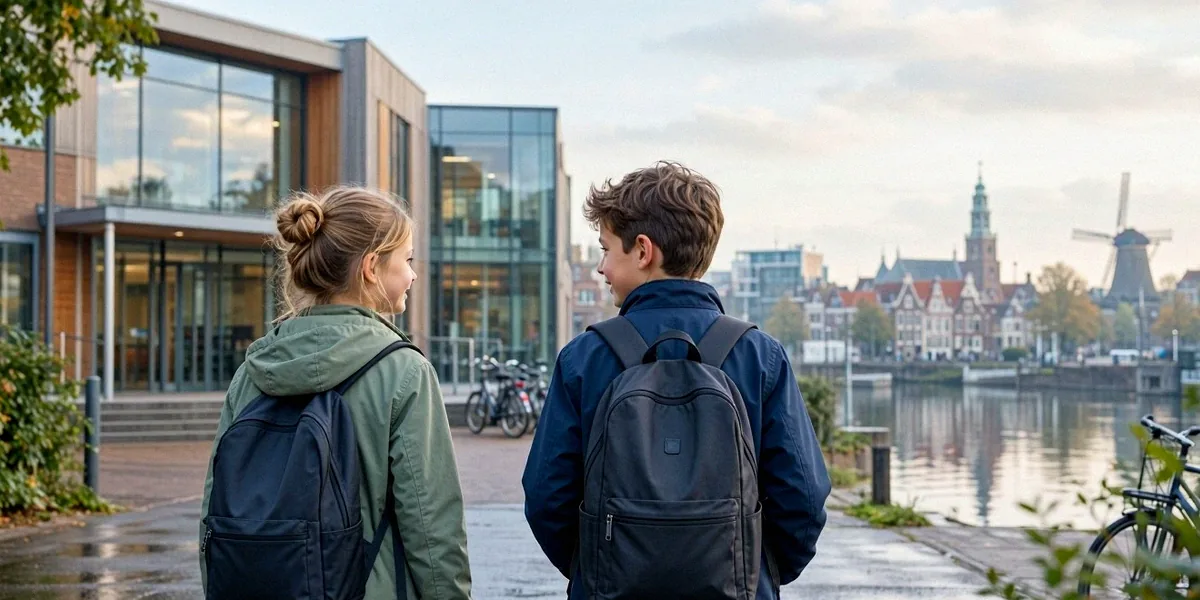
Dutch Schools for Expat Children: International or Local?
When the Vermeulen family landed in Haarlem last spring, they thought the hard part was behind them. Visas stamped, rental contract signed, boxes unpacked. Then came the question that keeps thousands of expat parents in the Netherlands awake at night: where should their eight-year-old go to school? Their Dutch neighbour swore by the local basisschool down the street. A colleague at work wouldn’t hear of anything but the international school in Amsterdam. Suddenly, a simple enrolment form felt like a decision that would shape their daughter’s entire childhood. If you’re staring at the same crossroads, you’re in good company — and this guide is for you.
The Dutch Education Landscape: A Quick Primer
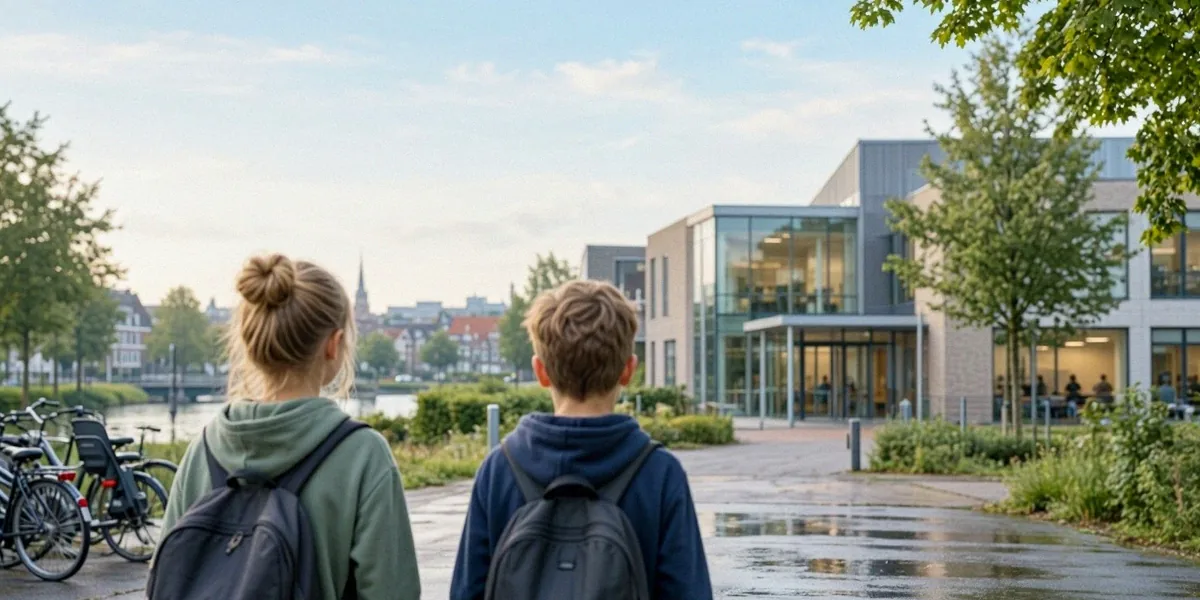
Before you weigh international against local, it helps to understand what you’re actually choosing between. The Dutch system is excellent, but it works quite differently from what many expat families are used to back home.
How the Dutch System Works
Children in the Netherlands typically start basisschool (primary school) at age four and stay until around age twelve. From there, they move to middelbare school (secondary school), which is split into distinct tracks: vmbo (pre-vocational), havo (senior general secondary), and vwo (pre-university). The track a child enters is largely determined by a recommendation from the primary school, combined with a national test in the final year. It’s a system that streams early, which surprises many parents from countries where everyone follows the same path until eighteen.
Dutch schools are also known for their hands-on approach, relatively little homework in the early years, and a strong emphasis on independence. Children cycle to school themselves from a young age — often perched in a bakfiets (cargo bike) before they’re old enough to ride solo. That cargo bike, by the way, is more than transport. It’s a daily symbol of local school life, and you’ll see dozens of them parked outside every basisschool gate at 8:30 in the morning.
Types of International Schools
International schools in the Netherlands generally follow one of two models: the International Baccalaureate (IB) or a national curriculum from abroad, most commonly British or American. Some are fully private, while others are subsidised and charge lower fees. Popular options include the British School in the Netherlands (with campuses in The Hague, Voorschoten, and Leidschenveen) and the American School of The Hague. There are also French, German, Japanese, and other national schools, plus a growing number of Dutch schools offering bilingual (Dutch-English) streams.
International Schools: Pros and Cons for Expat Families
For many newly arrived families, the international school feels like the safe harbour. Instruction is in English, the curriculum is familiar, and everyone around you is in the same boat. But it comes with trade-offs worth understanding before you sign the contract.
Benefits: Continuity and Community
The biggest advantage is continuity. If your family might move to Singapore or Chicago in three years, an IB or British curriculum means your child won’t lose ground with each relocation. Lessons, grading, and even school calendars are recognisable. The community is another draw: international schools are built around globally mobile families, so your child will meet classmates from dozens of nationalities, and parent networks tend to be welcoming and well-organised for newcomers.
There’s also the practical matter of language. Children who arrive with no Dutch can start learning immediately without the pressure of keeping up with subject content in a language they don’t yet speak.
Drawbacks: Cost and Cultural Bubble
The elephant in the room is cost. Annual tuition at international schools in the Netherlands often ranges from €15,000 to €25,000 per year, and that’s before registration fees, transport, and after-school activities. Some employers cover this as part of a relocation package; many don’t.
The second drawback is subtler: the bubble. It’s entirely possible to spend five years in the Netherlands, attend an international school, and never make a Dutch friend. Children in these schools often socialise almost exclusively with other expats, which can slow cultural integration for the whole family.
Local Dutch Schools: Immersion and Integration
Choosing a local Dutch school is a bigger leap, but for families planning to stay long-term, it can be transformative. Your child won’t just learn Dutch — they’ll live it.
Language Support for Newcomers
Many Dutch schools run nieuwkomersklassen (newcomer classes) specifically for children who don’t yet speak Dutch. In these small, intensive groups, kids receive daily language instruction for roughly a year before gradually joining mainstream classes. The results are often remarkable: children under ten frequently become conversational within six months and near-fluent within two years. Older children face a steeper climb, especially once subject matter becomes more language-heavy in middelbare school.
Cultural Integration and Social Life
Local school life is where your family truly meets the Netherlands. Your child will be invited to Dutch birthday parties (bring a small gift and prepare for the circle of chairs), join Sinterklaas celebrations in December, and cycle to friends’ houses on their own before you quite feel ready. Parents, meanwhile, get pulled into the school’s social fabric through ouderavonden (parent evenings) and volunteer committees — an unbeatable crash course in Dutch culture. And there’s no tuition to pay.
That said, be prepared for challenges: a language barrier at parent meetings, a teaching style that can feel less structured than what you’re used to, and waiting lists in popular areas like Amsterdam and Utrecht, where some schools fill up months in advance.
Key Factors to Consider When Choosing
There’s no universal right answer here — only the right answer for your family, right now. These are the factors we see matter most.
Length of Stay and Future Plans
If you’re in the Netherlands for two years and then heading elsewhere, an international school usually makes more sense. If you’re planting roots for a decade or more, a local school offers far greater long-term payoff, including a genuine pathway into Dutch universities and friendships.
Child’s Age and Language Skills
Younger children soak up Dutch with astonishing speed and adapt socially with minimal friction. Teenagers face a harder transition in local schools, particularly if they’re entering exam years. A child who already speaks a second language fluently often finds picking up Dutch easier.
Budget and Logistics
Beyond tuition, think about daily logistics. The Dutch school holiday schedule is spread differently from many home countries, with shorter summer breaks and more scattered weeks off — which can complicate childcare if both parents work. Factor in transport, too: will your child cycle, take the bus, or ride in the bakfiets? Local schools are usually within walking or cycling distance; international schools often require a commute.
A quick checklist we recommend:
- How long do we realistically expect to stay in the Netherlands?
- Can we absorb €15,000–€25,000 per year, or is it covered by an employer?
- Is our child under ten, or entering exam years?
- Do we want Dutch friendships and integration, or expat community and continuity?
- What are the waiting lists like at our preferred schools?
Making the Decision: Our Team’s Advice
After talking with countless expat families across the Netherlands, we can tell you this with confidence: there is no one-size-fits-all answer. The family that thrives at the American School of The Hague might have been miserable there, and vice versa. What matters is matching the school to your child’s personality and your family’s plans.
Visit and Ask Questions
Always visit in person — ideally on a normal school day, not an open house. Watch how children interact, how teachers speak to pupils, and how the corridors feel. Ask about class sizes, language support, homework expectations, and how the school handles mid-year arrivals. Talk to other expat parents, both at the school and in your neighbourhood. Their honest, unfiltered experiences are worth more than any brochure.
Trust Your Gut and Your Child
Involve your child in the decision, especially if they’re old enough to have an opinion. A school that feels warm and welcoming to them will do more for their adjustment than any curriculum. And remember: switching later is entirely possible. Plenty of families start at an international school and move to a Dutch one after a year, once the language and confidence have grown — or the reverse, if it isn’t working.
FAQ
Can my child attend a Dutch school without speaking any Dutch?
Yes. Many Dutch schools offer nieuwkomersklassen (newcomer classes) where children receive intensive Dutch language instruction before joining mainstream lessons. Availability varies by region, so ask each school directly.
How much do international schools in the Netherlands cost?
Annual tuition typically ranges from €15,000 to €25,000 per child, depending on the school and year group. Additional costs may include registration fees, school trips, and transport. Some employers cover fees as part of a relocation package.
Which international schools are most popular with expat families?
The British School in the Netherlands and the American School of The Hague are two of the best-known, alongside various IB World Schools and bilingual Dutch-English programmes across the country.
Will my child fall behind if they switch from a Dutch school to an international one?
Not usually. Dutch schools are academically strong, and international schools are experienced at integrating students from different systems. The transition is generally smoother than parents fear, though maths and language placement may need a short adjustment period.
Is it better to choose a local school for faster integration?
For most families planning to stay long-term, yes — local schools accelerate language learning and cultural immersion dramatically. But the right choice still depends on your child’s age, personality, and your family’s timeline.
Whether your child ends up cycling to a neighbourhood basisschool or boarding a bus to an international campus, both paths can lead to a happy, well-adjusted life in the Netherlands. The key is choosing with open eyes, staying flexible, and remembering that your child’s resilience will almost certainly surprise you. Whichever gate you walk through on that first morning, you’re not doing it alone — and you can always change direction later.