

Sinterklaas for Expat Families: Shoes, Poems and Pepernoten Explained
Our team’s first Sinterklaas in the Netherlands started with a shoe. A single child’s sneaker, placed neatly by the radiator in our rented apartment in Utrecht, with a carrot sticking out of it. We had no idea what was happening. By morning, the carrot was gone and a handful of pepernoten had mysteriously appeared inside the shoe. Over the next three weeks, we found those little spiced cookies on every surface of our home — in coat pockets, on windowsills, and somehow, inexplicably, in the bathroom. If you’re an expat family navigating your first Dutch December, this guide is for you.
What Is Sinterklaas? A Quick History for Newcomers
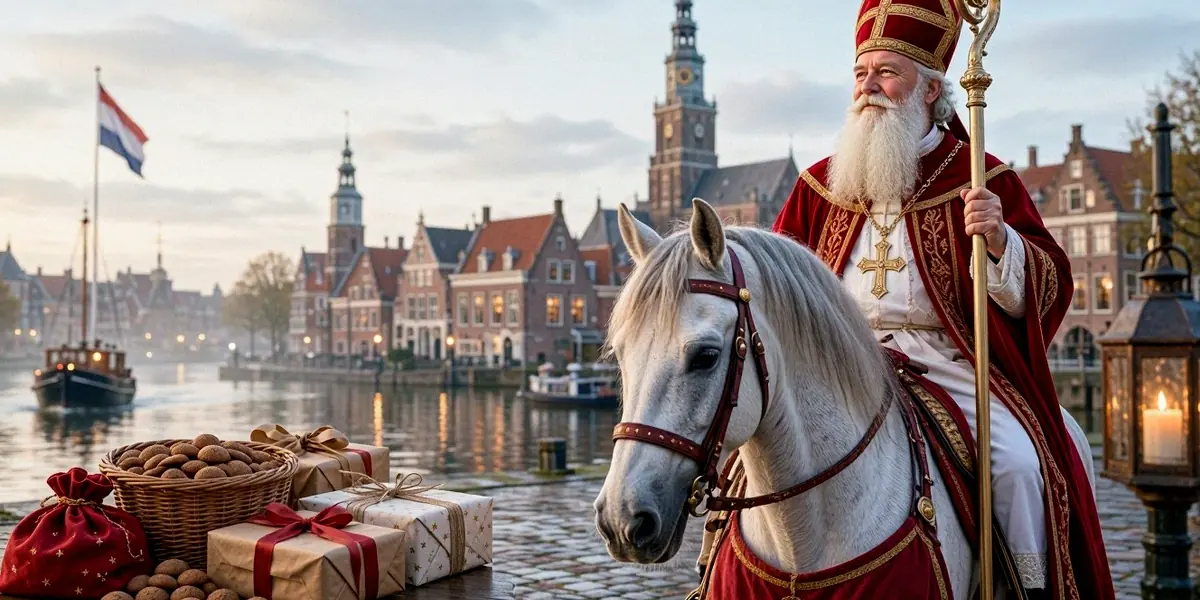
Sinterklaas is the Dutch celebration of Saint Nicholas, a fourth-century bishop known for his generosity. The main event, pakjesavond, takes place on December 5 in the Netherlands, when families gather to exchange gifts and read poems. Unlike Santa Claus, Sinterklaas doesn’t sneak down chimneys on Christmas Eve — he arrives weeks earlier, and the whole country watches.
The Arrival: Steamboat and Intocht
Sinterklaas arrives by steamboat from Spain during the national intocht in mid-November. The arrival is broadcast live on Dutch television, and hundreds of thousands of children line the canals and harbours of towns like Dordrecht, Amsterdam, and Zaanstad to wave at the bishop and his helpers. After the intocht, Sinterklaas is officially “in the country,” and the shoe-setting begins. Many municipalities organise their own local intocht, often on a smaller scale, which is a great low-pressure introduction for expat families.
Sinterklaas vs. Santa Claus: Key Differences
Newcomers often confuse the two. Here’s how they differ:
- Sinterklaas wears a red bishop’s robe and mitre, carries a golden staff, and rides a white horse named Schimmel.
- Santa Claus wears a red suit and lives at the North Pole; Sinterklaas travels from Spain by boat.
- Sinterklaas is celebrated on December 5 with pakjesavond; Santa is associated with December 25.
- Sinterklaas gifts are often accompanied by a poem; Santa gifts usually aren’t.
The Zwarte Piet Conversation: What Expats Should Know
For decades, Sinterklaas was accompanied by Zwarte Piet, a figure in blackface makeup. This tradition has been the subject of intense public debate in the Netherlands, and many Dutch cities and schools have replaced Zwarte Piet with Roetveegpiet — a helper with soot smudges on their face, reflecting the story that they climb through chimneys. If you’re new to the country, it’s worth understanding this shift before attending a school or community event, as policies vary by municipality.
The Shoe Ritual: How to Join In Without Getting It Wrong
From mid-November until December 5, Dutch children place a shoe by the fireplace, radiator, or front door before bed. Inside or beside the shoe, they leave a carrot and some hay for Schimmel the horse, plus a wish list or drawing. Overnight, Sinterklaas (or a parent) replaces the offering with a small gift: stickers, marbles, a chocolate letter, or a handful of pepernoten.
What to Put in the Shoe (and What Not To)
Keep it small and thoughtful. A chocolate letter, a pack of stickers, a tiny puzzle, or a few kruidnoten all work well. Avoid expensive items — the shoe is about anticipation, not extravagance. Some families add a short rhyming note from Sinterklaas. Don’t put anything perishable or messy in the shoe itself; the carrot and hay go beside it, not inside.
Carrots, Hay, and Schimmel the Horse
The carrot and hay are for Schimmel, Sinterklaas’s white horse. In the morning, children check whether Schimmel has eaten the carrot — a sign that Sinterklaas visited. Some families also leave a bucket of water. If you have a pet rabbit or guinea pig, expect confusion. Our team once found a very satisfied neighbourhood cat asleep next to an empty shoe.
Shoe Nights at Dutch Schools and Daycares
Many basisscholen and kinderdagverblijven organise shoe nights during the Sinterklaas period. Children bring a shoe to class, and teachers or parent volunteers fill them with small treats. If your child attends a Dutch school, you’ll likely receive a note about this in November. International schools in Amsterdam, Utrecht, and The Hague often run their own adapted versions.
Sinterklaas Poems: The Art of the Surprise
The sinterklaasgedicht is a short rhyming poem that accompanies a gift. Traditionally, the poem teases the recipient affectionately — pointing out a quirky habit, a funny incident from the past year, or a gentle character trait. Poems are signed “from Sinterklaas,” and the gift itself is often disguised as a “surprise” (pronounced sur-PREE-zuh), meaning the wrapping is part of the joke.
How to Write a Sinterklaas Poem in English
You don’t need to write in Dutch. Expat families can write in English, and simple AABB rhymes are perfectly acceptable. Start with the person’s name, mention something funny or warm about them, and end with a wish or a joke. Eight to twelve lines is plenty. If you’re writing for a Dutch colleague or friend, a short Dutch poem — even a clumsy one — is usually received with delight.
Surprise Gifts: When the Wrapping Is Part of the Joke
A “surprise” is a homemade construction that hides the gift inside something thematic. A gift for a coffee lover might be wrapped inside a giant papier-mâché coffee cup. A gift for a cyclist might be hidden inside a cardboard bakfiets. The goal is creativity, not perfection. Craft stores like Action and HEMA sell cheap supplies, and YouTube is full of tutorials.
Poem Etiquette: Teasing vs. Mean-Spirited
The rule is simple: tease, don’t wound. A good Sinterklaas poem makes everyone laugh, including the recipient. Avoid sensitive topics like weight, job losses, or relationship troubles. If you’re unsure, err on the side of warmth. A sweet poem is always better than a cruel one.
Pepernoten, Kruidnoten, and Other Treats to Try
Walk into any Albert Heijn in November and you’ll be confronted by an entire aisle of small brown cookies. Here’s the crash course.
Pepernoten vs. Kruidnoten: The Great Dutch Debate
Technically, pepernoten are soft, anise-flavoured cookies, while kruidnoten are crunchy, spiced cookies made with cinnamon, nutmeg, and cloves. In everyday Dutch speech, however, most people call kruidnoten “pepernoten.” If you ask for pepernoten at a bakery, you’ll almost certainly get the crunchy kind. Both are worth trying.
Chocolate Letters: Why Your Initial Matters
Chocolate letters are exactly what they sound like: large chocolate initials, usually the first letter of your name. They come in milk, dark, and white chocolate, and brands like Verkade and Albert Heijn’s huismerk are everywhere in December. The tradition is simple — you receive the letter that matches your name. If your name starts with an X, good luck.
Where to Buy Sinterklaas Treats in the Netherlands
Albert Heijn, Jumbo, PLUS, and Lidl all stock Sinterklaas treats from late September. Bolletje and Peijnenburg are reliable brands for kruidnoten. For something fancier, try a local bakkerij or a speculaas specialist. Speculaas — a spiced biscuit pressed into wooden moulds — is another December staple worth seeking out.
Celebrating Sinterklaas as an Expat Family: Practical Tips
You don’t have to go all-in. Sinterklaas is flexible, and most Dutch people appreciate any effort you make. Here’s how to start.
Pakjesavond: How to Host Your Own
Pick a date around December 5, invite a few families, and ask everyone to bring one small gift and a short poem. Serve hot chocolate, pepernoten, and something savoury. Keep the gift budget low — €5 to €10 per person is normal. If you have a bakfiets, it’s a handy way to haul gifts and treats to a friend’s house, though a regular bike with panniers works fine too.
Sinterklaas at International Schools
Many international schools in Amsterdam, Utrecht, and The Hague organise Sinterklaas events, often adapted for non-Dutch families. These usually include a visit from a Roetveegpiet, a shoe-night activity, and a simplified poem exchange. Check with your school’s parent association in October.
Blending Dutch and Home-Country Traditions
You can absolutely keep your own December traditions alongside Sinterklaas. Some expat families do pakjesavond on December 5 and then celebrate their home-country Christmas as usual. Others merge the two, adding a chocolate letter to a Christmas stocking. There’s no wrong answer.
Common Expat Questions About Sinterklaas, Answered
Is Sinterklaas Appropriate for Non-Dutch Families?
Yes, with awareness. The Zwarte Piet debate is real, and many Dutch cities and schools have moved to Roetveegpiet. If you’re uncomfortable with any aspect, you can participate in the parts that feel right for your family — the shoe, the treats, the poems — and skip the rest.
Do Adults Exchange Gifts Too?
Yes. Many Dutch adults celebrate Sinterklaas with friends, colleagues, or partners, often with a strict spending limit and a handmade surprise. Office Sinterklaas exchanges are common in November and early December.
What If We Don’t Want to Participate?
Participation is optional. Dutch culture generally respects personal choice, and no one will force your child to set a shoe or write a poem. That said, a small gesture — a chocolate letter for a teacher, or a plate of kruidnoten for the class — is usually appreciated and helps your family feel connected.
Sinterklaas is a warm, family-focused tradition that expats can adapt at their own pace. You don’t need perfect Dutch, a hand-carved surprise, or a bakfiets full of gifts. Start with a shoe by the radiator, a carrot for Schimmel, and a bag of kruidnoten. The rest — the poems, the pakjesavond, the pepernoten on every surface — will follow. Embrace the chaos with curiosity rather than perfection, and you’ll find that Sinterklaas becomes one of the most charming parts of Dutch December.