

Sinterklaas for Newcomers: Traditions That Inspire Stories
Our first Sinterklaas in the Netherlands, we confidently told a Dutch friend we’d see her at the big Christmas parade on 5 December. She stared at us, blinked twice, and gently explained that Sinterklaas has nothing to do with Christmas, that he arrives by boat in mid-November, and that 5 December is pakjesavond — the actual gift night. We had also bought a Santa hat. We wore it anyway. That mix of confusion, embarrassment, and eventual delight is exactly why Sinterklaas has become one of our favourite sources of short stories and flash fiction. If you’re an expat in the Netherlands trying to make sense of it all, this guide walks through what the tradition actually is, what trips newcomers up, and how to turn it into creative writing.
What Sinterklaas Actually Is (And Isn’t)
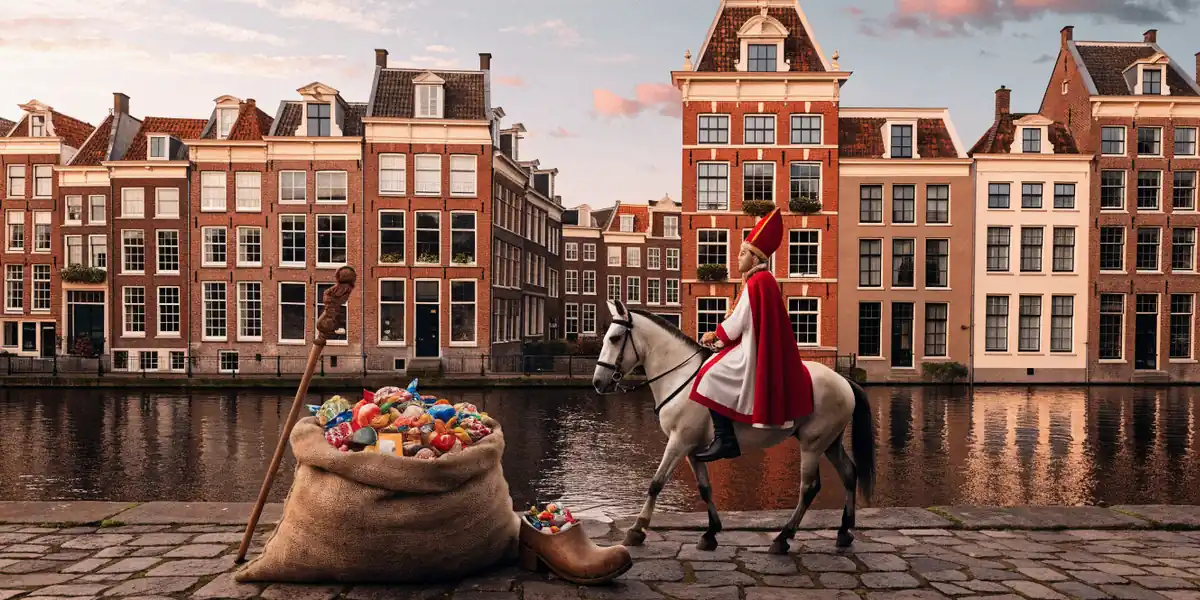
Sinterklaas is a Dutch tradition built around Saint Nicholas, a bishop who — according to the story — arrives by steamboat from Spain in mid-November. His official feast day is 5 December, when Dutch families celebrate pakjesavond, or “gift evening.” He rides a white horse named Amerigo over the rooftops, and children leave carrots and hay in their shoes for the horse. It’s warm, theatrical, and entirely separate from the Christmas celebrations that follow later in December.
The Arrival: Intocht and the Steamboat
The intocht, or arrival, happens in mid-November and is broadcast on national television. A steamboat pulls into a Dutch harbour — often a different city each year — and Sinterklaas steps ashore with his helpers, the Piets. Cities like Amsterdam, Utrecht, and Rotterdam host large parades with crowds of children, marching bands, and pepernoten thrown from the floats. For newcomers, the intocht is the moment the season officially starts. Shops fill with chocolate letters, and every café seems to smell of cinnamon.
Pakjesavond: The Real Gift Night
Pakjesavond on 5 December is when the actual presents are exchanged. Families gather, someone knocks loudly on the door (or window), and a sack of gifts is mysteriously “left behind.” Children sing Sinterklaas songs, sometimes perform a small poem, and then open their presents. Christmas Day in the Netherlands is comparatively quiet — a family meal, maybe a church service, and no mountain of gifts. If you’re used to a December 25 gift explosion, pakjesavond will feel like the main event, because it is.
Sinterklaas vs. Santa Claus: Why Newcomers Get Confused
Both figures descend from Saint Nicholas, but they’ve evolved into completely different characters. Sinterklaas is a bishop with a mitre, a long red robe, and a golden staff. Santa Claus wears a red suit, lives at the North Pole, and delivers gifts on Christmas Eve. Sinterklaas arrives by boat from Spain; Santa arrives by sleigh from the Arctic. Sinterklaas has Amerigo the horse; Santa has reindeer. Mixing them up in front of a Dutch colleague is a rite of passage for expats — and honestly, good material for a story.
Key Traditions Newcomers Should Know
Once you understand the timeline, the smaller rituals start to make sense. They’re also where the storytelling gold is buried.
Shoes, Carrots, and Pepernoten: The Daily Ritual
From mid-November until 5 December, children set their shoes by the door or fireplace before bed. They put a carrot or some hay inside for Amerigo, sometimes a drawing or a wish list, and sing a Sinterklaas song. In the morning, the carrot is gone and a small gift or candy has appeared. Pepernoten and kruidnoten — small spiced cookies that newcomers often confuse with each other — are the season’s snack. Kruidnoten are the crunchy, coin-sized ones; pepernoten are softer and chunkier. Chocolate letters, one per family member’s initial, are everywhere. So are marzipan figures and speculaas.
Surprises and Poems: The Creative Heart of Sinterklaas
Among adults, the tradition shifts. Dutch families and workplaces do a “surprise” — a homemade craft that hides a gift inside, accompanied by a poem. The poem gently roasts the recipient, referencing inside jokes, quirks, and the past year’s embarrassments. The craft might be a papier-mâché replica of the recipient’s messy desk, or a shoebox turned into a tiny kitchen. The poem is the point. It’s essentially flash fiction with a punchline, and it’s why we think Sinterklaas is the most writer-friendly holiday in Europe.
Songs and TV: The Shared Cultural Script
Certain songs are unavoidable: “Sinterklaas Kapoentje,” “Zie Ginds Komt de Stoomboot,” and “Sinterklaasje Bonne Bonne Bonne.” Dutch children learn them at school and sing them at every opportunity. The Sinterklaasjournaal, a daily TV news programme for kids, follows the fictional adventures of the saint and his Piets in the run-up to 5 December. Even adults watch it. For an expat, learning one song is a shortcut into the shared script of Dutch childhood.
The Zwarte Piet Debate: What Expats Should Understand
Zwarte Piet — “Black Pete” — is Sinterklaas’s traditional helper, historically portrayed in blackface with curly hair and red lips. The figure is genuinely controversial in the Netherlands. Many Dutch people grew up with it as an innocent children’s character; many others, particularly Black Dutch citizens and international observers, find it painful and rooted in racist caricature. The conversation has been ongoing for over a decade and is not resolved.
Roetveegpiet and Changing Traditions
In response, many Dutch cities — including Amsterdam and Utrecht — have replaced Zwarte Piet with Roetveegpiet, or “soot-smudge Piet.” This version has light smudges of soot on the face, explained in the story as residue from climbing down chimneys. National television, most schools, and many employers have made the switch. Some families and towns still use the older version, which keeps the debate alive every November.
How to Talk About It Without Causing Offence
As a newcomer, the most useful posture is curiosity without judgment. Ask Dutch friends how they celebrate and what the figure means to them. Listen when Black Dutch neighbours explain why it hurts. Avoid pronouncing the tradition “fine” or “obviously racist” in the first conversation — you’re a guest in a debate that has decades of context. Observe, ask, and write about what you notice. Fiction is often a better place for complexity than a dinner table.
Why Sinterklaas Is a Goldmine for Fiction Writers
Every element of Sinterklaas is already a story structure. There’s built-in suspense (what’s in the sack?), surreal imagery (a bishop on a rooftop with a horse), emotional stakes (a child’s belief starting to crack), and cultural friction (an expat trying to fake their way through a Dutch tradition). The surprise poem is literally flash fiction with a twist ending. If you write short stories, this holiday hands you a full toolkit.
Character Ideas: The Expat Parent, the Doubting Child, the Dutch In-Law
The expat parent who accidentally buys the wrong cookies. The eight-year-old who has started asking logical questions about how one man visits every house in the Netherlands in a single night. The Dutch mother-in-law who takes the surprise poem far too seriously. The Roetveegpiet performer on their first day. The neighbour who never participates but watches from the window every year.
Conflict Ideas: Cultural Misunderstandings and Secret-Keeping
A workplace surprise exchange where the poem accidentally reveals an affair. A child who writes a letter to Sinterklaas asking for something impossible. A family where one parent refuses to celebrate because of the Piet debate, and the other insists on tradition. An expat who tries to recreate Sinterklaas for their kids in a country that has never heard of it.
Setting Ideas: A Rainy Dutch Street, a Warm Living Room, a Crowded Intocht
The intocht is a sensory feast: wet cobblestones, brass bands, children on shoulders, the smell of fried dough. A Dutch living room on pakjesavond is the opposite — small, warm, tense with anticipation. A rainy street at 7 a.m. while a parent sneaks a gift into a shoe is a perfect flash fiction frame. Pick one and the story almost writes itself.
Writing Prompts Inspired by Sinterklaas
We use these prompts in our own drafting sessions. Steal them, twist them, submit the results.
Flash Fiction Prompts (Under 500 Words)
- A surprise gift is opened at pakjesavond, and the poem inside describes a family secret no one has spoken about in twenty years.
- An adult expat writes a letter to Sinterklaas asking for something they can’t ask anyone else for.
- The family dog narrates the shoe ritual from under the radiator, suspicious of the carrot disappearing every night.
- A Roetveegpiet on their first day of work realises the chimney story doesn’t quite hold up.
- A child leaves a note for Amerigo instead of Sinterklaas, and gets an answer.
Short Story Prompts (1000-3000 Words)
- A Dutch in-law insists on a surprise exchange; the expat partner has three days to write a poem in a language they barely speak.
- A ten-year-old figures out the truth about Sinterklaas on 4 December and has to decide whether to tell their younger sibling before pakjesavond.
- Two colleagues draw each other’s names for the office surprise and discover they’ve been quietly resenting each other for years.
- A family in Amsterdam navigates the Piet debate across three generations during one long pakjesavond.
If one of these turns into something you’re proud of, send it to us. We publish short fiction and flash fiction from writers around the world, and we love stories that sit inside a specific cultural moment.
How We Turn Dutch Traditions into Stories
Our approach isn’t complicated, but it is deliberate. From mid-November through early January, we keep what we call a tradition journal. Every time something strikes us — a smell, a phrase, an awkward encounter — it goes in the notebook. Not as a story yet. Just as raw material.
Our Notebook Method: Observing Without Judging
We note sensory details: the smell of pepernoten drifting out of a HEMA, the specific cadence of “Sinterklaas Kapoentje” sung by a group of six-year-olds, the way a Dutch colleague’s face changes when the Piet conversation starts. We also interview people — Dutch friends, expat neighbours, the woman at the bakkerij who has made chocolate letters every November for thirty years. We ask what they remember, what they argue about, what they miss. We don’t try to resolve anything. We just collect.
From Prompt to Published: A Mini Case Study
Last year, one of us wrote a 400-word flash piece about an expat mother hiding a chocolate letter in her daughter’s shoe at 6 a.m. in the rain. It started as a journal note — “the shoe thing is weird and beautiful.” It became a flash fiction draft in twenty minutes, then a longer short story about the same character two weeks later. That’s the pattern we recommend: draft short, see what sticks, expand only what earns it.
FAQ
When is Sinterklaas celebrated in the Netherlands?
Sinterklaas arrives by steamboat in mid-November, and the main celebration — pakjesavond — takes place on the evening of 5 December. The season runs from the intocht until that night.
What is the difference between Sinterklaas and Santa Claus?
They share a historical root in Saint Nicholas but are separate figures. Sinterklaas is a Dutch bishop who arrives by boat from Spain and rides a white horse named Amerigo. Santa Claus is the American Christmas character who lives at the North Pole and delivers gifts on Christmas Eve.
What are pepernoten and kruidnoten?
Both are small spiced cookies sold everywhere during the Sinterklaas season. Kruidnoten are the small, crunchy ones most people mean when they say “pepernoten.” Pepernoten are softer and irregularly shaped. Chocolate letters are also traditional.
What is a Roetveegpiet?
Roetveegpiet, or “soot-smudge Piet,” is the modern version of Sinterklaas’s helper, with light soot marks instead of blackface. Many Dutch cities, including Amsterdam and Utrecht, have adopted this version, though the older Zwarte Piet figure is still used in some places and the debate continues.
Can I submit a Sinterklaas-inspired story to your blog?
Yes. We publish short stories and flash fiction, including work inspired by Dutch traditions and expat life in the Netherlands. Use one of the prompts above or bring your own, and send it our way.
Sinterklaas isn’t just a Dutch holiday to survive as a newcomer — it’s a rich, complicated, and genuinely joyful source of stories. Whether you’re writing about a child’s last year of belief, an expat fumbling through a surprise poem, or a rainy morning shoe ritual, the tradition gives you characters, conflict, and imagery for free. Grab a notebook, buy some kruidnoten, and start drafting.