
Surviving a Dutch December: From Sinterklaas to Oliebollen
Our first Dutch December started in the dark. Literally. We were cycling to school at 8:15 in the morning, rain dripping off our helmets, when we noticed the Albert Heijn window had transformed overnight into a wall of chocolate letters and orange pepernoten. Our youngest asked why Santa Claus was already in the shops in November. That was the moment we realised we had a lot to learn: Sinterklaas is not Santa Claus, pakjesavond is not Christmas Eve, and the Dutch holiday season is longer, sweeter, and stranger than anything we had experienced back home. Here is what we have figured out since.
Sinterklaas: The Real Start of the Dutch Holiday Season
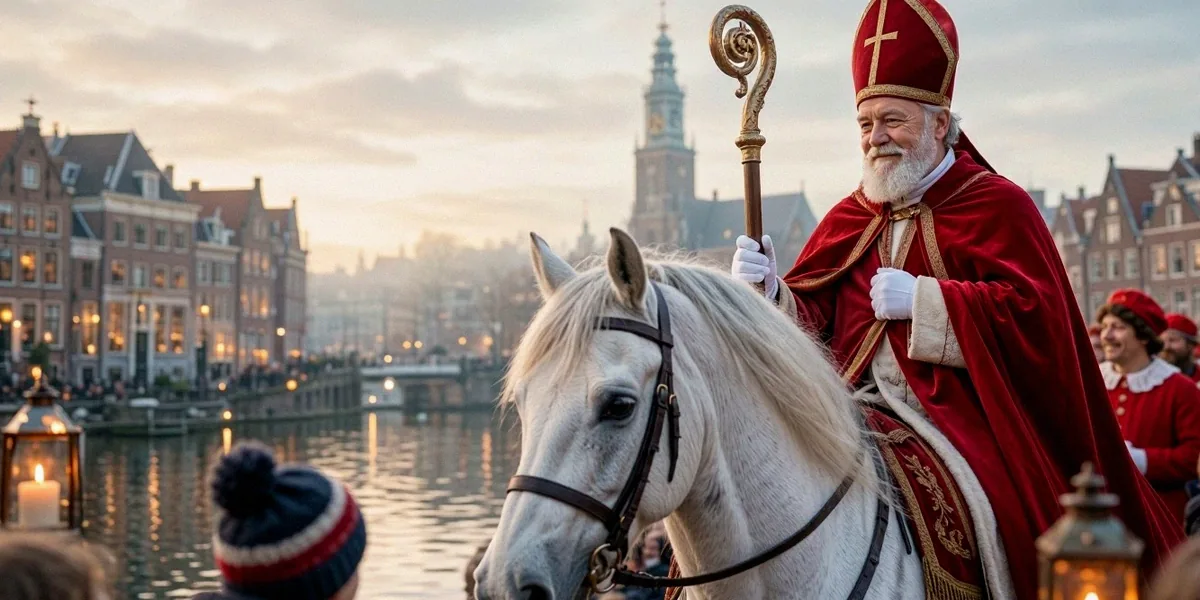
Sinterklaas arrives by steamboat from Spain in mid-November, and from that moment until 5 December, the Netherlands belongs to him. He is not a jolly North Pole toymaker; he is a serious, bearded bishop with a mitre, a staff, and a white horse named Ozosnel (or Amerigo, depending on which arrival you watch). The main gift-giving event for families is pakjesavond on 5 December, not Christmas morning. If you are an expat, this catches you off guard the first year: you buy Christmas presents in December, but Dutch children are already unwrapping their big gifts on the evening of the fifth.
The Arrival: Intocht and the Steamboat
The intocht happens on the first Saturday after 11 November, and it is broadcast live on national television. The Sinterklaasjournaal, a daily news programme for children, follows his journey for weeks. Cities organise their own arrivals, often with a local actor playing Sinterklaas sailing into a canal or harbour. We took our kids to the intocht in our town the first year and were stunned by the crowd: thousands of families, most of them singing traditional songs, many with small children in full piet costume. Arrive early, bring rain gear, and expect the entire centre to be packed.
Pakjesavond: Gifts, Poems, and Surprises
Pakjesavond on 5 December is the heart of the Dutch Sinterklaas tradition. Families gather in the evening, often with a knock on the door and a sack of presents left on the doorstep. The twist is the surprise: gifts are usually wrapped in elaborate homemade packages, and each one comes with a poem (a sinterklaasgedicht) that teases the recipient about their personality or the past year’s events. Adults often draw names weeks in advance so everyone makes one surprise for one person. If you are invited to a Dutch pakjesavond, bring a small gift, write a short poem, and do not be offended if the poem makes fun of you. That is the point.
Navigating Zwarte Piet as an Expat Family
The Zwarte Piet debate is one of the most sensitive topics in the Netherlands, and as expats we have had to decide how to handle it with our children. Traditionally, Sinterklaas’s helper was depicted with blackface makeup, curly wigs, and gold earrings. In recent years, many schools, municipalities, and broadcasters have switched to roetveegpieten (soot-smudge Pieten) or other alternatives, while some communities hold on to the older version. Our approach has been to explain the history honestly to our kids, follow the policy of their school, and focus on the parts of the tradition we can enjoy together. It is not a comfortable conversation, but it is a necessary one, and Dutch colleagues and friends are usually willing to talk about it if you ask respectfully.
Dutch Treats We Can’t Stop Eating (and Some We Can’t Stomach)
From mid-November, every supermarket, bakery, and office kitchen in the country becomes a sugar delivery system. Pepernoten, kruidnoten, speculaas, chocoladeletters, banketstaaf, and gevulde koeken appear in bulk, and resistance is genuinely futile. Our kitchen counter has not been crumb-free since October.
Pepernoten vs. Kruidnoten: The Great Confusion
Here is a fact that took us two years to learn: kruidnoten are often mistakenly called pepernoten, and the two are not the same thing. Kruidnoten are the small, hard, crunchy, spiced biscuits you see piled in every shop. Real pepernoten are softer, chewier, and much less common. Almost everyone in the Netherlands calls the crunchy ones pepernoten anyway, so you will sound local if you do too, but now you know the difference.
Chocoladeletters and Speculaas
Chocoladeletters are exactly what they sound like: large chocolate initials, usually given on pakjesavond, with the letter matching the recipient’s first name. They come in milk, dark, and white chocolate, and the big ones from brands like Droste or Verkade are genuinely impressive. Speculaas is the spiced biscuit cousin of kruidnoten, often shaped like windmills or Sinterklaas figures, and banketstaaf is a flaky pastry roll filled with almond paste that we now buy at least three times each December.
Where to Buy: HEMA, Albert Heijn, and Local Bakeries
For everyday snacking, HEMA and Albert Heijn are reliable and cheap. HEMA’s own-brand kruidnoten and chocoladeletters are excellent value, and Albert Heijn rolls out an enormous seasonal aisle from early October. For something better, find a local bakkerij: the speculaas and banketstaaf from a proper Dutch bakery are on another level. Our rule is simple: supermarket for volume, bakery for the good stuff.
Christmas in the Netherlands: Trees, Gourmetten, and Kerststol
Dutch Christmas is quieter and more family-focused than the Sinterklaas period, and it starts late. Many families do not put up the Christmas tree until after 5 December, once Sinterklaas has officially left the country. Christmas itself is two days: Eerste Kerstdag on 25 December and Tweede Kerstdag on 26 December, both public holidays.
Gourmetten: The Dutch Fondue-Style Dinner
Gourmetten is a popular Dutch Christmas Eve tradition involving a table-top grill or hot plate in the middle of the dining table. Everyone gets a small pan and cooks their own bite-sized pieces of meat, fish, vegetables, and sometimes pancakes or eggs. It is slow, social, and slightly chaotic, which is exactly why we love it. You can buy a gourmetstel at any Blokker, HEMA, or online, and the supermarkets sell pre-cut gourmet packages in December.
Kerststol and Other Christmas Breads
Kerststol is a rich, yeasted Christmas bread filled with almond paste and dried fruit, dusted with powdered sugar. It appears in every supermarket and bakery from early December and is eaten at breakfast or with afternoon coffee. If you only try one Dutch Christmas food, make it this one. Warm slices with butter are dangerously good.
Blending Traditions: Our Family’s Hybrid Christmas
Like most expat families we know, we have built a hybrid Christmas. We do gourmetten on Christmas Eve because our Dutch friends do, but we also cook a roast on Christmas Day because that is what we grew up with. The kids get stockings on Christmas morning and small gifts on pakjesavond. Nobody has complained yet.
Bakfiets, Winter Weather, and Getting Around
Cycling in the Netherlands is a year-round activity, not a summer hobby. In December that means rain, wind, and darkness by 16:30. For expat families, the bakfiets (cargo bike) often becomes the difference between dreading the school run and actually enjoying it.
Cycling in the Rain: Gear and Mindset
The Dutch do not wait for good weather; they dress for it. Our winter kit is simple: a proper rain jacket, waterproof trousers, gloves, a warm hat under the helmet, and lights that are charged every Sunday. Buy a decent poncho or rain suit for the kids, and consider a rain cover for the bakfiets box. The mindset shift matters more than the gear: once you accept that you will get wet sometimes, the cycling becomes normal.
Why a Bakfiets Changed Our Family Logistics
We resisted a bakfiets for a year because of the price. Then we bought a second-hand one and wondered why we waited. Two kids, groceries, school bags, and a Christmas tree all fit in one trip. The two-wheeled bakfiets is more agile; the three-wheeled version is more stable in wind. Electric bakfietsen are increasingly common and make longer commutes realistic. For many expat families, the bakfiets becomes both a practical tool and a small symbol of having settled in.
Safety Tips for Dark Dutch Days
- Use two lights: a front white light and a rear red light, plus reflectors on the wheels.
- Wear something reflective, especially on the bakfiets box or your jacket.
- Assume drivers and other cyclists cannot see you at unlit intersections.
- Check your brakes and tyres monthly; wet leaves and cobblestones are slippery.
- Teach kids to signal turns and to look over their shoulder before moving.
New Year’s Eve: Oliebollen, Fireworks, and Dutch Resolutions
Oud en Nieuw in the Netherlands is loud, sugary, and completely unlike Christmas. Oliebollen stands appear on street corners in mid-December, fireworks go on sale on 28 December, and the country collectively stays up until well past midnight.
Oliebollen: Where to Find the Best Stands
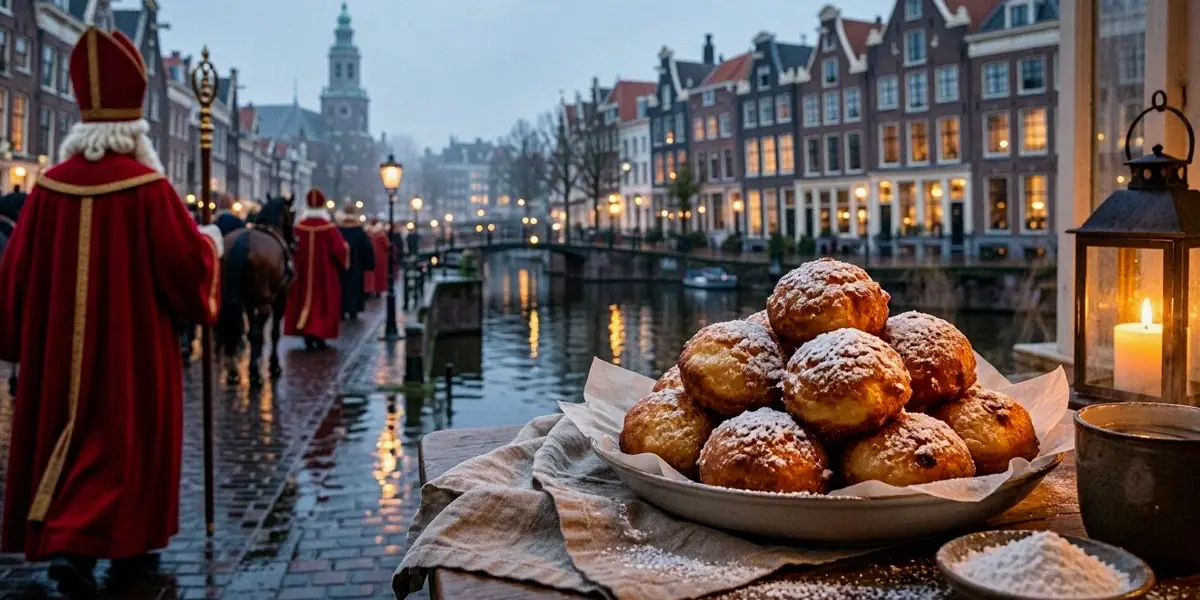
Oliebollen are deep-fried dough balls traditionally eaten on New Year’s Eve, usually with raisins or currants inside and a thick layer of powdered sugar on top. The best ones come from temporary stands run by local bakeries or sports clubs, not the supermarket. Our rule is to look for a queue: if locals are waiting in the cold, the oliebollen are good. Order a mix of plain and raisin, and eat them within an hour of buying.
Fireworks: What Expats Should Know
Consumer fireworks are legal to buy only on 28, 29, and 30 December, and to set off only between 18:00 on 31 December and 02:00 on 1 January. In practice, the rules are stretched, and the last few hours of the year can sound like a war zone. If you have pets or small children, plan ahead: close the curtains, put on music, and consider staying in. Many municipalities now organise professional firework shows as an alternative.
Nieuwjaarsduik: A Cold but Memorable Start
The nieuwjaarsduik is a New Year’s Day dive into the North Sea, most famously at Scheveningen, where thousands of people in orange hats run into water that is around 6°C. There are similar dives at beaches and lakes across the country. We did it once, screamed the whole way in, and would absolutely do it again. Bring a towel, warm clothes, and a camera for the photo.
Survival Tips for Expats Facing Their First Dutch December
Our first December here was overwhelming. Our second was manageable. Our third felt genuinely fun. The difference was planning and community.
Shopping and Opening Hours: Plan Ahead
Buy pepernoten and kruidnoten early, because the best brands sell out. Book pakjesavond gifts in advance, ideally by mid-November, because toy shops get chaotic. And remember: most shops close on 25 and 26 December, and many close early on 24 and 31 December. Do your grocery shopping on 23 December if you can.
Embracing Gezelligheid Without Burning Out
Gezelligheid is the Dutch word for cosy togetherness, and December is its peak season. It is lovely, but it is also a lot: school events, work borrels, family visits, and pakjesavond all in a few weeks. Say yes to what matters and skip the rest without guilt. A quiet evening with oliebollen and a film counts as gezellig too.
Finding Community: Expat Groups and Events
Facebook groups like Expats in the Netherlands, along with local city groups and international school parent networks, are where you find out which intocht is worth attending and which oliebollen stand is best. Many expat organisations also run their own Sinterklaas and New Year’s events, which can be a gentler introduction than jumping straight into a Dutch family celebration.
FAQ
Is Sinterklaas the same as Santa Claus?
No. Sinterklaas is a separate Dutch tradition based on Saint Nicholas, arriving by steamboat from Spain in mid-November. His main celebration is pakjesavond on 5 December. Santa Claus, or Kerstman, is a much smaller figure in the Netherlands and is associated with Christmas Day.
What is the difference between pepernoten and kruidnoten?
Kruidnoten are the small, hard, crunchy spiced biscuits sold everywhere in the autumn and winter. Pepernoten are softer, chewier, and less common. Most Dutch people call kruidnoten pepernoten in everyday speech, so the names are effectively interchangeable in shops.
Do Dutch families give gifts on Christmas or on 5 December?
Most Dutch families give their main gifts on pakjesavond, 5 December. Christmas is more about family meals, gourmetten, and church services, with smaller or no gifts. Many expat families end up doing both.
Where can I try oliebollen in the Netherlands?
Oliebollen are sold from temporary stands across the country from mid-December until early January, and are traditionally eaten on New Year’s Eve. The best stands are usually run by local bakeries or sports clubs, and a long queue is a good sign.
What is the nieuwjaarsduik?
The nieuwjaarsduik is a New Year’s Day dive into the North Sea or another cold body of water, most famously at Scheveningen. Thousands of people take part each year, often wearing orange hats, and it is considered a bracing but fun way to start the year.
Surviving a Dutch December is really about embracing the chaos: the steamboat arrivals, the poem-wrapped surprises, the plate of oliebollen at midnight, and the fact that you will find kruidnoten crumbs in your coat pocket until March. Blend your own traditions with the Dutch ones, lean on the expat community when you need it, and let the gezelligheid carry you through the dark weeks. By the time the fireworks start on 31 December, you will already be planning next year’s pakjesavond.